
Harness Your Habits
Lead yourself first. One habit at a time.
This is about applying marginal gains to how you lead your life.Chapter 14, The Big Bold Mindset
My boss was waiting behind a plant.
For a week I'd arrived at the office later every day: 9.05, 9.10, 9.15. My boss had had enough and was waiting by the doors to catch me.
In truth, I deserved it. In my early twenties in the City I wasn't looking after myself. Late nights, junk food, no exercise, a sluggish rush-hour tube every morning. No big bold goals were possible.
The world has changed since then. We know far more about how to stay energised for the long haul. Big bold goals demand high energy over long periods, so how you lead yourself matters.
What's helping, and what's in the way?
What's one thing you do that puts you in the best place to achieve your goals?
What's one thing that puts you in the worst place?
What's one thing to do more of, and one to do less of?
Habits take longer than you think. Plan for it.
Research from University College London found it takes 66 days on average for a new behaviour to become automatic. It varied a lot from person to person.
Areas worth exploring
Relationships
The Harvard Study of Adult Development, running since 1938, links close relationships with longer, happier lives.
Rest
Dr Saundra Dalton-Smith describes seven types of rest, from physical to creative.
Sleep
Professor Matthew Walker's research shows how much sleep affects health, learning and decisions.
How leaders run their own experiments
Many CEO groups now invite experts in to share the latest thinking on health and performance. Few leaders have time to read the science themselves, so they follow people who do, like Rich Roll, Andrew Huberman and Dr Rangan Chatterjee.
The habits that work are personal. The point is to form your own hypothesis and test it.
Will there be weeks with a rubbish score? Almost certainly. Don't sweat it.Caspar Craven
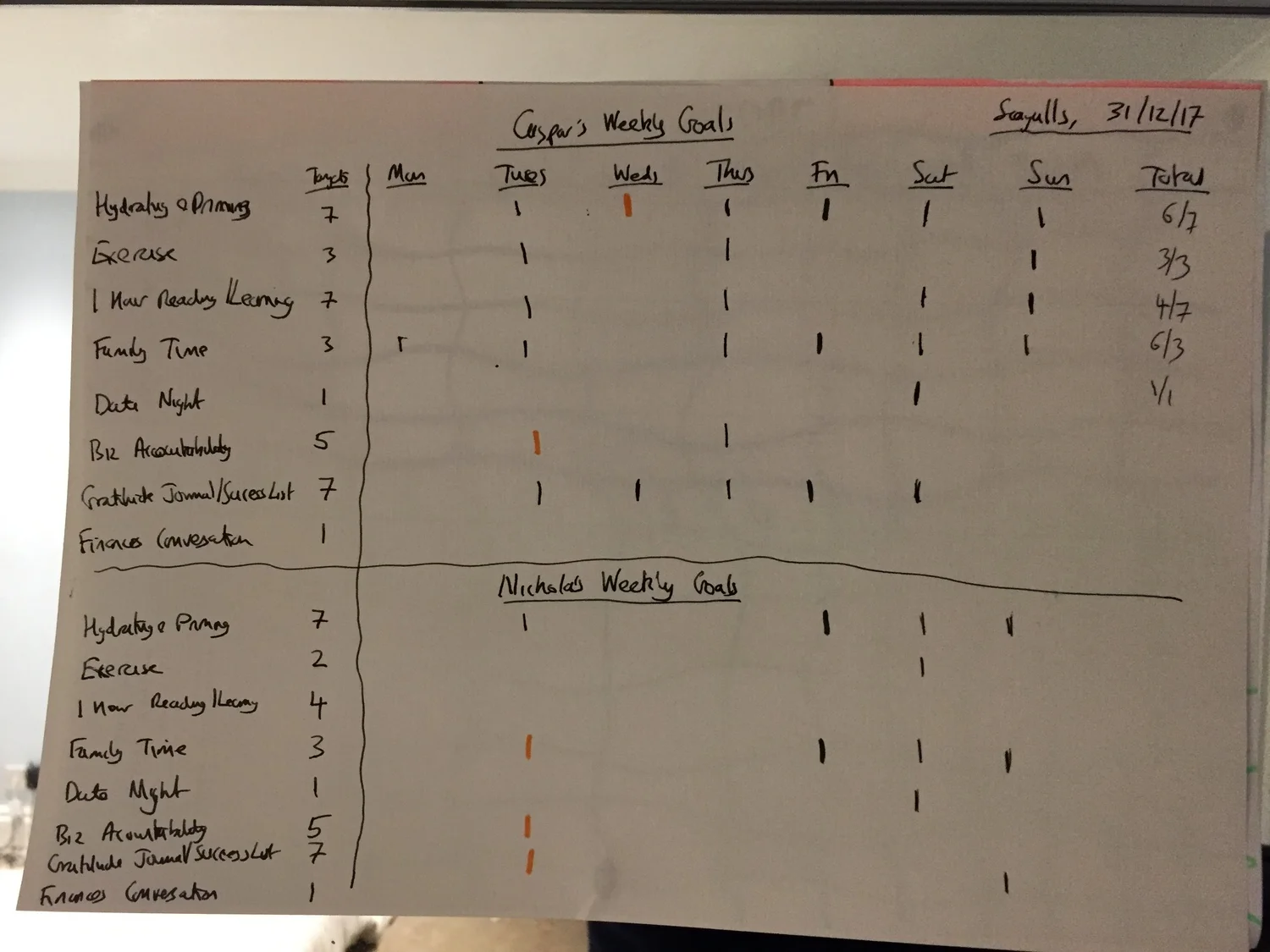
The Habits Chart
A one-page tool Caspar uses every day to lead himself. It's a system of nudges that gets you back on track.
Pick one habit
Choose one you already lean towards or do some of the time.
Put it in sight
Print the chart and stick it where you'll see it every day.
Tick it daily
Each day you do it, tick it off.
Score the week
Give yourself a score each week, and track it across the year.
Tick one habit every day
Pick one habit you already half-do. Draw a grid with the days across the top, stick it where you'll see it, and tick it every day this week.
Team habits
Teams have habits too: how meetings start, when email gets answered, how wins get celebrated.
Want Caspar to take your team through this? casparcraven.com